


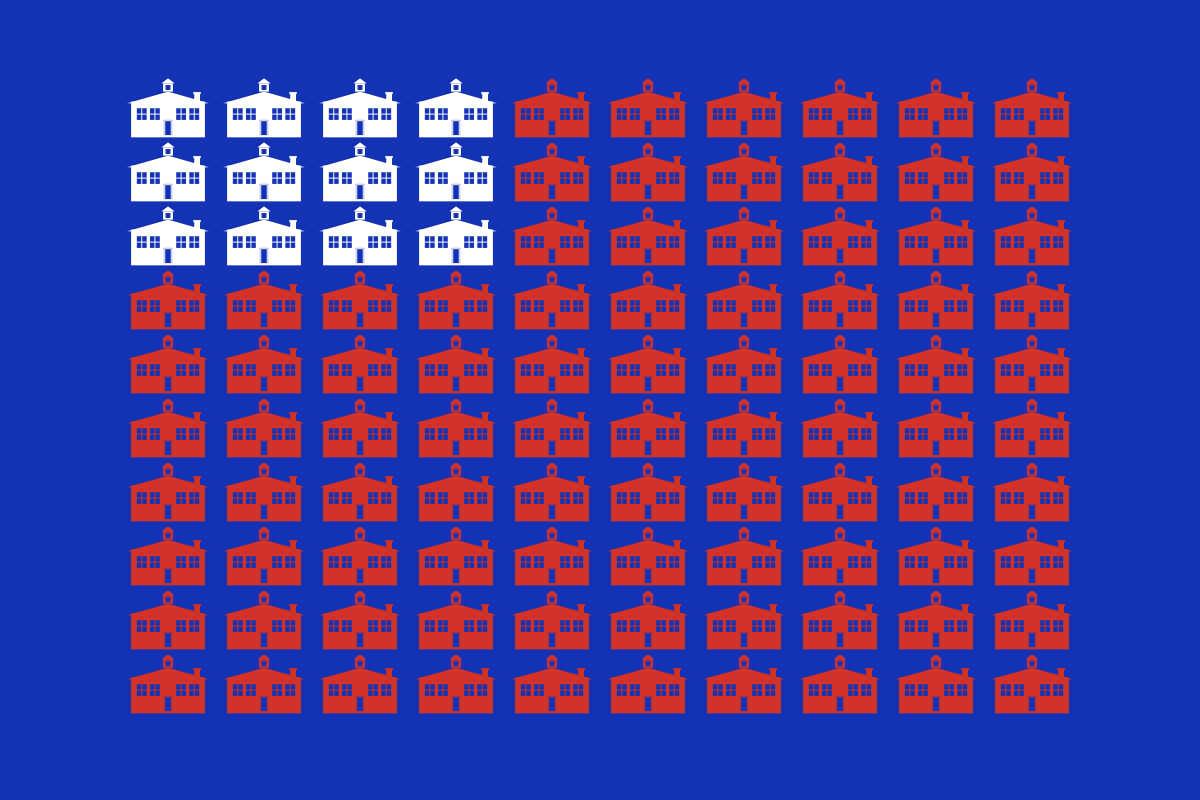
If there is one number that should radically reshape how we approach teaching and learning in American schools, it is this: 12%.
That’s the percentage of time children actually spend in school each year. Do the simple math. Most states require roughly 180 school days. Multiply that by about six hours a day. Add it up and ask: what fraction of all the hours in a given year does that represent? The answer is just over twelve percent. Students spend approximately 88% of their lives each year somewhere other than a classroom.
Sit with that for a moment. When you internalize this number, two things happen.
Two Big Lessons
First, you gain a staggering appreciation for what teachers accomplish. A single English teacher might see a student for, what, forty-five minutes a day? Across an entire year, that teacher works with dozens of young people in a sliver of time so thin it almost defies measurement. Whatever growth occurs in that sliver — and real growth does occur — qualifies as something close to miraculous. Teachers deserve far more credit than the reform conversation tends to give them.
Second, and perhaps more consequentially, you begin to understand why researchers talk so much about out-of-school factors. These are all the conditions that shape a child’s preparedness to learn before they ever walk through the building’s front door. A teacher whose students have their basic needs met might think about these factors less. But teachers whose students experience poverty, that’s a different story. Is the child safe at home? Can they eat breakfast? Do they feel secure walking to school? Can their family afford the bus fare? Are they getting adequate health care? Do they need glasses? Each of these factors exerts a disproportionate influence on what happens once a student sits down in a classroom. The 88% overloads the 12%, relentlessly.
The Education Reform Paradox
Here lies one of the great ironies of education reform over the last few decades: you cannot reform education by focusing on schools. Standards, tests, curricula — all of these matter, of course. But stack them together and you are still only addressing twelve percent of a student’s life. The sooner we understand this at the local, state, and national level, the sooner we can move past the circular arguments and political posturing that have consumed so much energy and public money while leaving the deeper conditions of children’s lives largely untouched.
This is what makes some of the ongoing research from the Learning Policy Institute so compelling. Their work keeps surfacing one model as among the most promising approaches to genuine school improvement: Community Schools. The concept is deceptively simple, though not easy. A school purposefully partners with community-based organizations to address what is happening during the 88% of time students aren’t in classrooms. Health clinics operate on school grounds. Social workers connect families to housing assistance. After-school programs provide safe, enriching spaces. Food pantries become part of the school’s ecosystem rather than something families navigate alone.
Community Schools can be expensive, and they can be tricky to get right. The model depends heavily on the individuals representing each partner organization who come to the table; when those relationships fracture, the whole architecture wobbles. But difficulty is not an argument against seriousness. It should be studied further, funded more generously, and treated as a legitimate pillar of education strategy rather than a feel-good footnote.
Teach the Teachers
There is another insight buried in the 12% that I think we overlook. When we design teacher education and ongoing professional learning, we tend to frame the work narrowly: what do teachers need to know in order to support students in the classroom? That framing isn’t wrong, but it is incomplete. We should also be helping teachers understand how vital the 88% is and what role they can play in bridging it. If your students mostly come from the surrounding neighborhood, do you know where the food pantries are? When you call home, are you only asking about grades, or are you learning something about the texture of that child’s life beyond your walls? Is there information about a student’s social and emotional state that might illuminate why they stare out the window every afternoon? These questions aren’t peripheral to pedagogy. Research tells us, with mounting clarity, that the answers to them bear directly on a student’s capacity to learn anything at all.
We have spent decades trying to optimize what happens inside classrooms. That work is not wasted. But if we keep pretending that the 12% can compensate for the 88%, we will keep arriving at the same disappointing results and wondering why. The math isn’t complicated. We just have to be willing to do it.